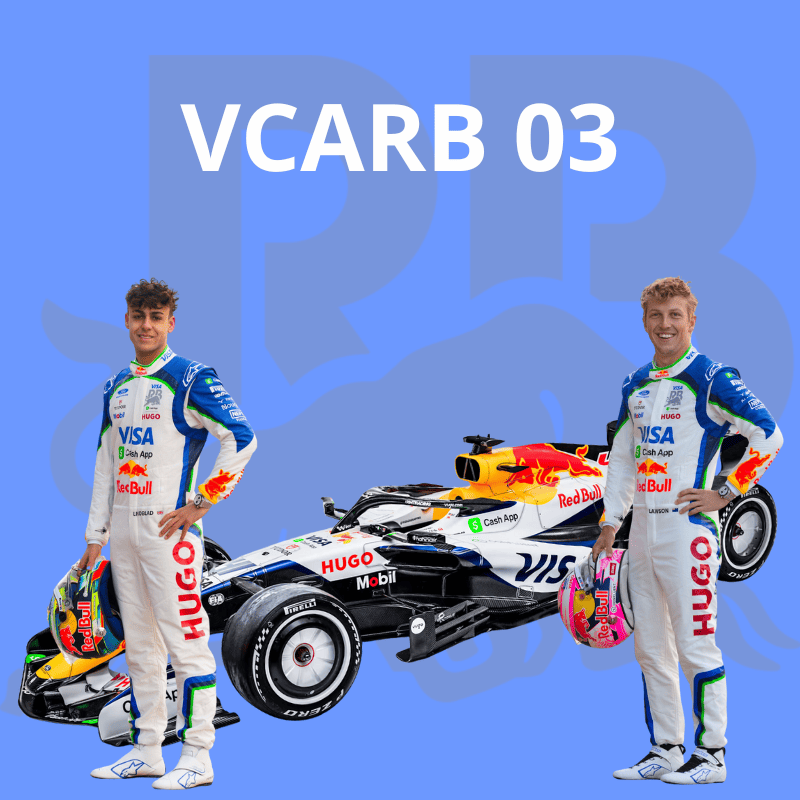
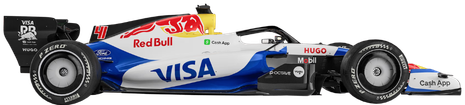
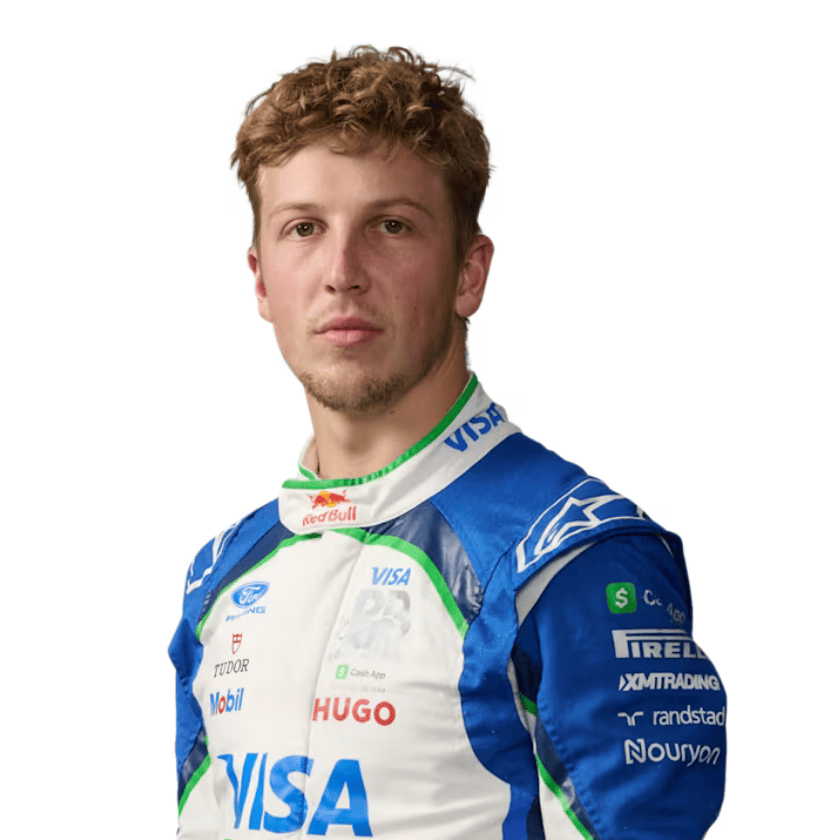
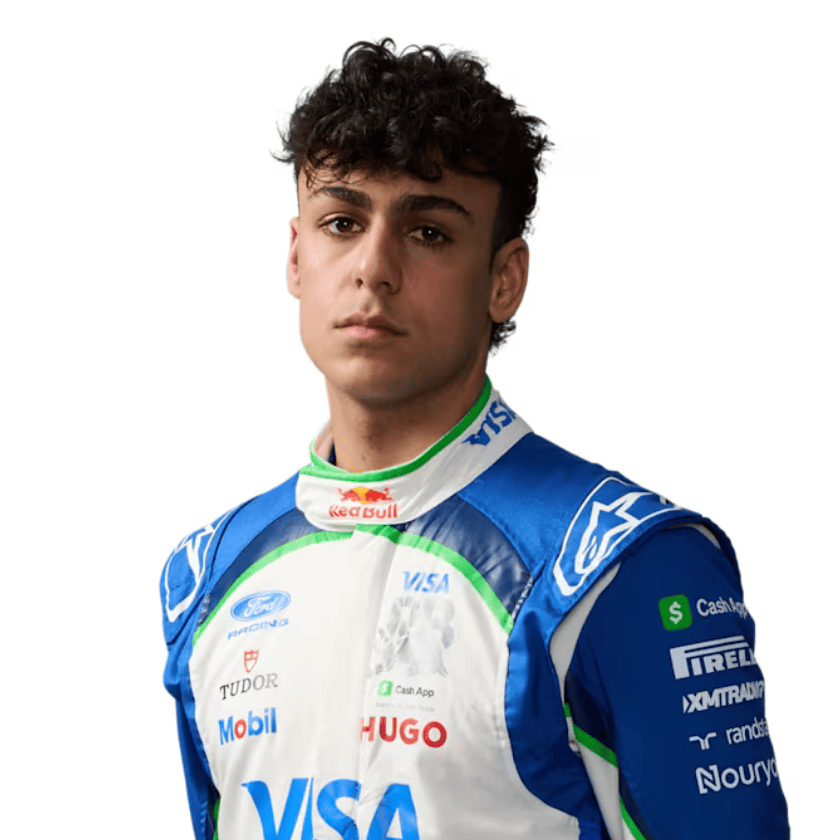
Founded in 2006 as Red Bull’s gateway for developing young talent in Formula 1, AlphaTauri – known originally as Toro Rosso – emerged from the former Minardi operation. The philosophy paid off almost instantly when Sebastian Vettel delivered an unforgettable victory in 2008, validating the junior-team concept before graduating to championship glory with Red Bull Racing. While the mission of cultivating future stars remains, the Faenza-based outfit has long since established itself as a fully fledged constructor rather than merely a support team.
2025
Progress continues as the team climbs to sixth in the constructors’ standings. Alan Permane steps in as Team Principal following Laurent Mekies’ promotion to Red Bull Racing, while rookie sensation Isack Hadjar secures a long-awaited return to the podium with a third-place finish at Zandvoort.
2024
Competing under the RB name for the first time, the team finishes eighth overall but nearly doubles its points tally compared to the previous season. Yuki Tsunoda leads the scoring, while Daniel Ricciardo is replaced by Liam Lawson for the final six races.
2023
The final season under the AlphaTauri identity ends with eighth in the standings. Nyck de Vries is released mid-season, making way for Daniel Ricciardo, whose return is disrupted by a hand injury that sidelines him for five Grands Prix.
2022
Momentum fades as rivals gain ground, resulting in ninth place overall and a sharp drop in points compared to 2021. Pierre Gasly records the team’s best result with fifth in Baku before departing at the end of the year.
2021
A strong campaign sees the team rise to sixth in the championship. Pierre Gasly delivers a podium in Azerbaijan and scores consistently, while Yuki Tsunoda grows into the role and finishes a superb fourth in the season finale.
2020
The rebrand to AlphaTauri brings renewed energy and competitiveness. The team scores over 100 points, highlighted by Pierre Gasly’s memorable victory at Monza – both his and the team’s first in Formula 1.
2019
In their final year as Toro Rosso, the team enjoys its most productive season to date, finishing sixth with 85 points. Pierre Gasly returns mid-season from Red Bull Racing and responds with an impressive maiden podium in Brazil.
2018
A transitional year as the team switches to Honda power, setting the stage for Red Bull Racing’s future move. Pierre Gasly shines with fourth place in Bahrain, while ninth overall masks clear technical progress.
2017
Despite multiple driver changes and a shift to Renault engines, the team again finishes seventh. Carlos Sainz departs mid-season, Daniil Kvyat is dropped, and Pierre Gasly and Brendon Hartley complete the year.
2016
Regular top-ten contenders despite using year-old Ferrari power units. The mid-season promotion of Max Verstappen to Red Bull Racing causes disruption, but the team recovers to finish seventh once more.
2015
Running the youngest driver pairing in F1 history, Verstappen and Sainz frequently outperform expectations. Reliability issues with the Renault engine limit progress, leaving the team seventh overall.
2014
A switch from Ferrari to Renault engines sees consistent Q3 appearances, but race results fail to match qualifying pace. Sixth place in Singapore stands as the season’s highlight en route to seventh in the standings.
2013
A solid but understated campaign brings several top-ten finishes. Jean-Éric Vergne and Daniel Ricciardo deliver steady points, earning Ricciardo promotion to Red Bull Racing for 2014.
2012
Ricciardo and Vergne struggle early with an uncompetitive car but show improvement in the second half of the season, scoring in six of the final ten races.
2011
An inconsistent yet encouraging year yields more points than the entire 2010 campaign. Seventh places in Italy and Korea stand out, though the team narrowly miss seventh overall in the standings.
2010
The team’s first season operating as an independent constructor. While qualifying performances improve, points remain scarce, with eighth place in Canada the best result. Finish ninth overall.
2009
A difficult year sees struggles in qualifying and race trim. Jaime Alguersuari replaces Sébastien Bourdais mid-season, but despite a major upgrade, the team finishes last.
2008
After a slow start, the season transforms dramatically with Vettel’s stunning pole position and victory at Monza. Strong late-season form lifts the team to sixth, ahead of Red Bull Racing.
2007
Early reliability problems give way to steady improvement after Sebastian Vettel joins mid-season. A strong result in China marks the team’s best performance to date.
2006
The former Minardi operation begins its new chapter as Red Bull’s junior team. Retaining restricted V10 engines, the squad punches above its weight, scoring its first point in the United States Grand Prix.